2/1/2025
In Chun Ding's work, images shift from passive objects of observation to beings that can be touched, folded, and sensed. By interweaving traditional cyanotype photography with digital collage and textile materials, she liberates images from the flat plane, transporting them into an intermediate space that is both fragile and obstinate, both organic and mechanical. Chun Ding pursues her visual explorations through the tension between natural forms, bodily traces, and machine logic.
Her practice is founded on an obsession with tactility. On the surfaces of fabric and image, life leaves its mark while time settles. The contours of plants, clues of machinery, and lingering traces of sunlight knit together a material memory situated between body and image. Her cyanotype works resemble breathing images: the fabric refuses to lie perfectly flat, the image resists stability, and all states of “completion” are merely fleeting pauses. Her concern lies less in “what is presented” and more in how to render the image as skin, as an archive, and as a perpetually open site.
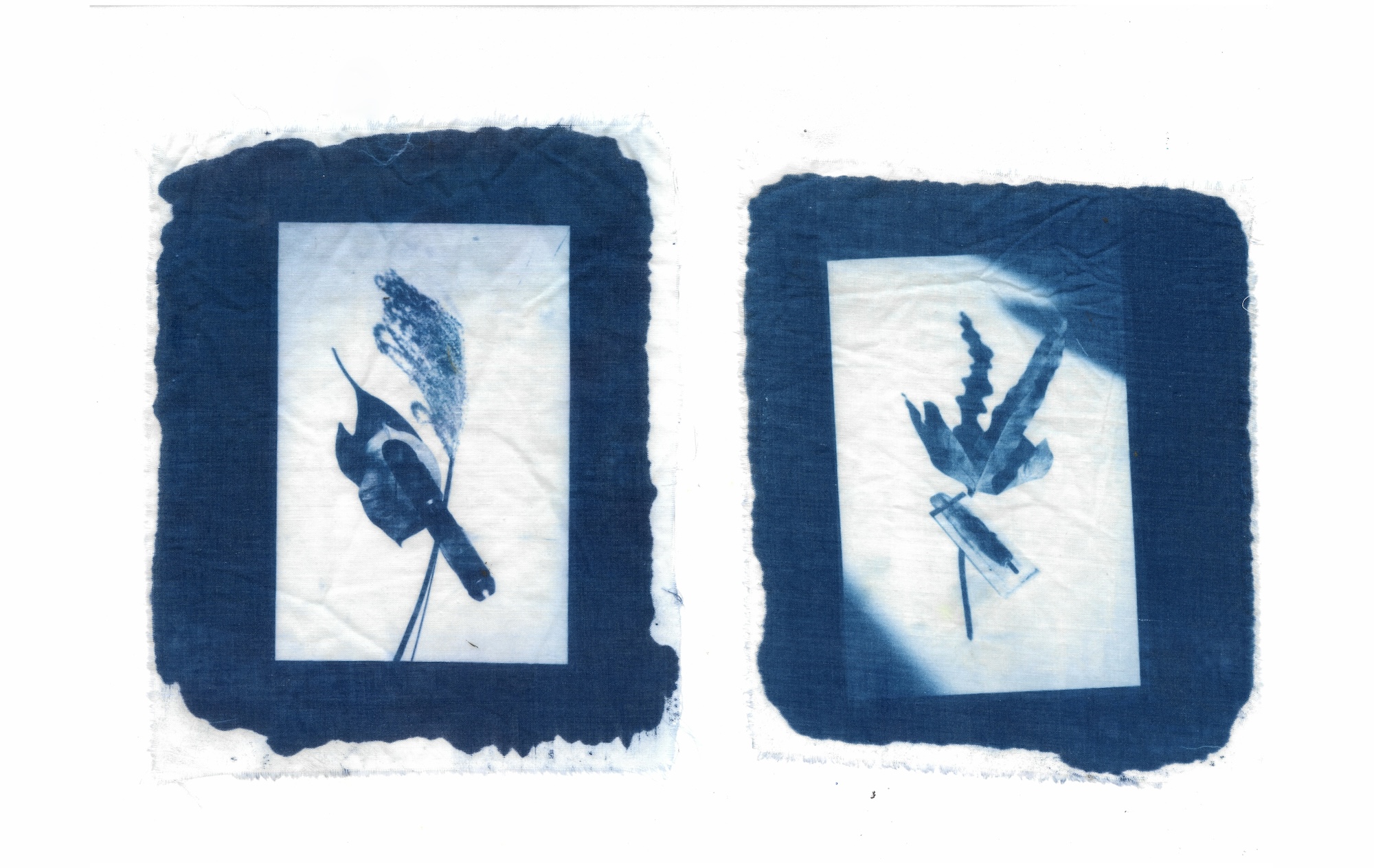
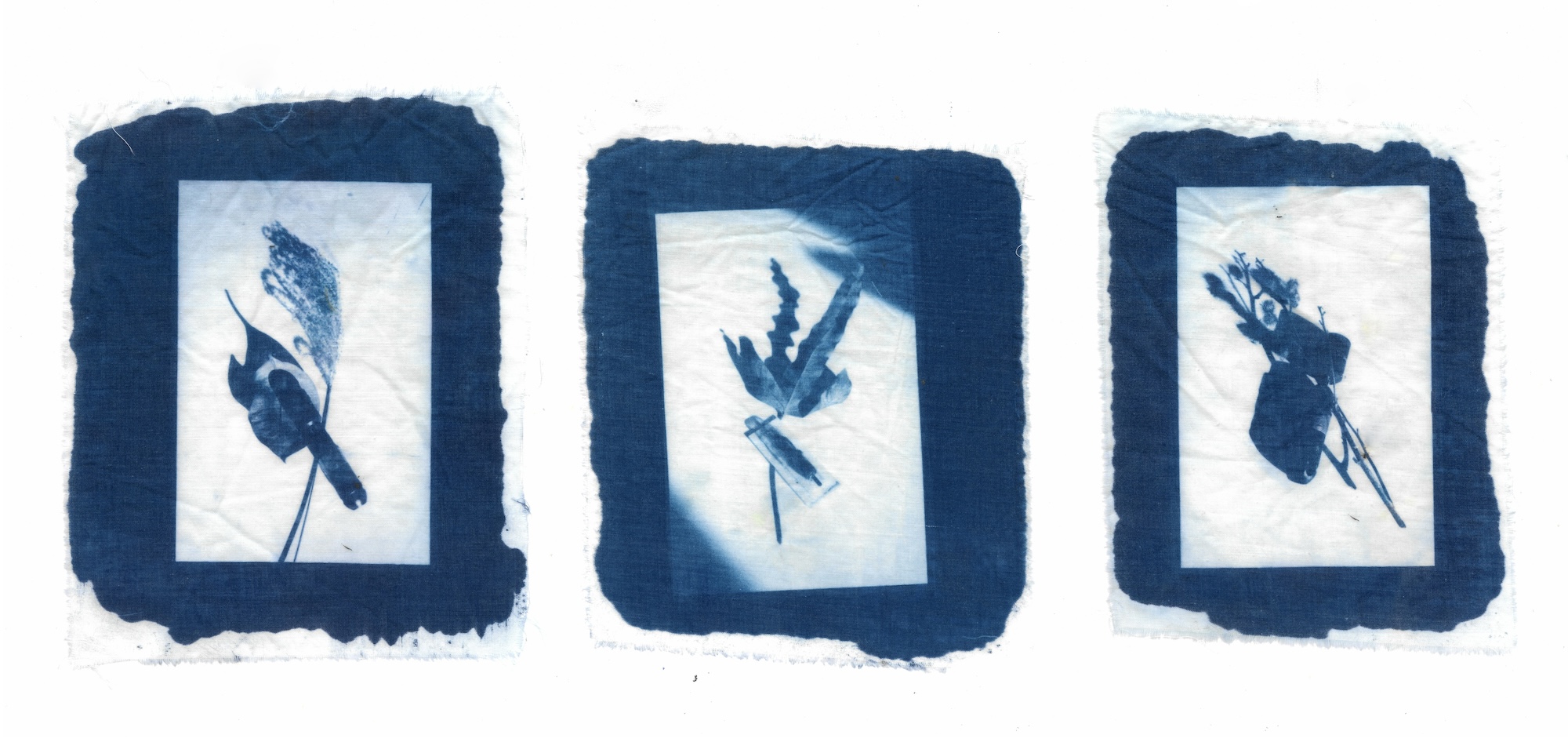
In Blueprint for a Soft Collision, Chun Ding explores the subtle tension between botanical fragments and mechanical traces through a diptych of cyanotype textiles. A gently tilting reed rests beside a feather, while beneath translucent leaves, the outline of a tattoo needle becomes imperceptibly visible. Nature and industry, softness and precision intertwine within the frame, never quite merging. This is neither a scene of “reconciliation” nor a gentle collision; it is an inevitable and delicate impact. Creases, loose threads, and stitch marks on the fabric preserve the physical process of the work’s creation, rendering the image itself evidence of “becoming”, no longer a smooth reproduction, but an entity bearing the imprint of pressure, light, and touch.
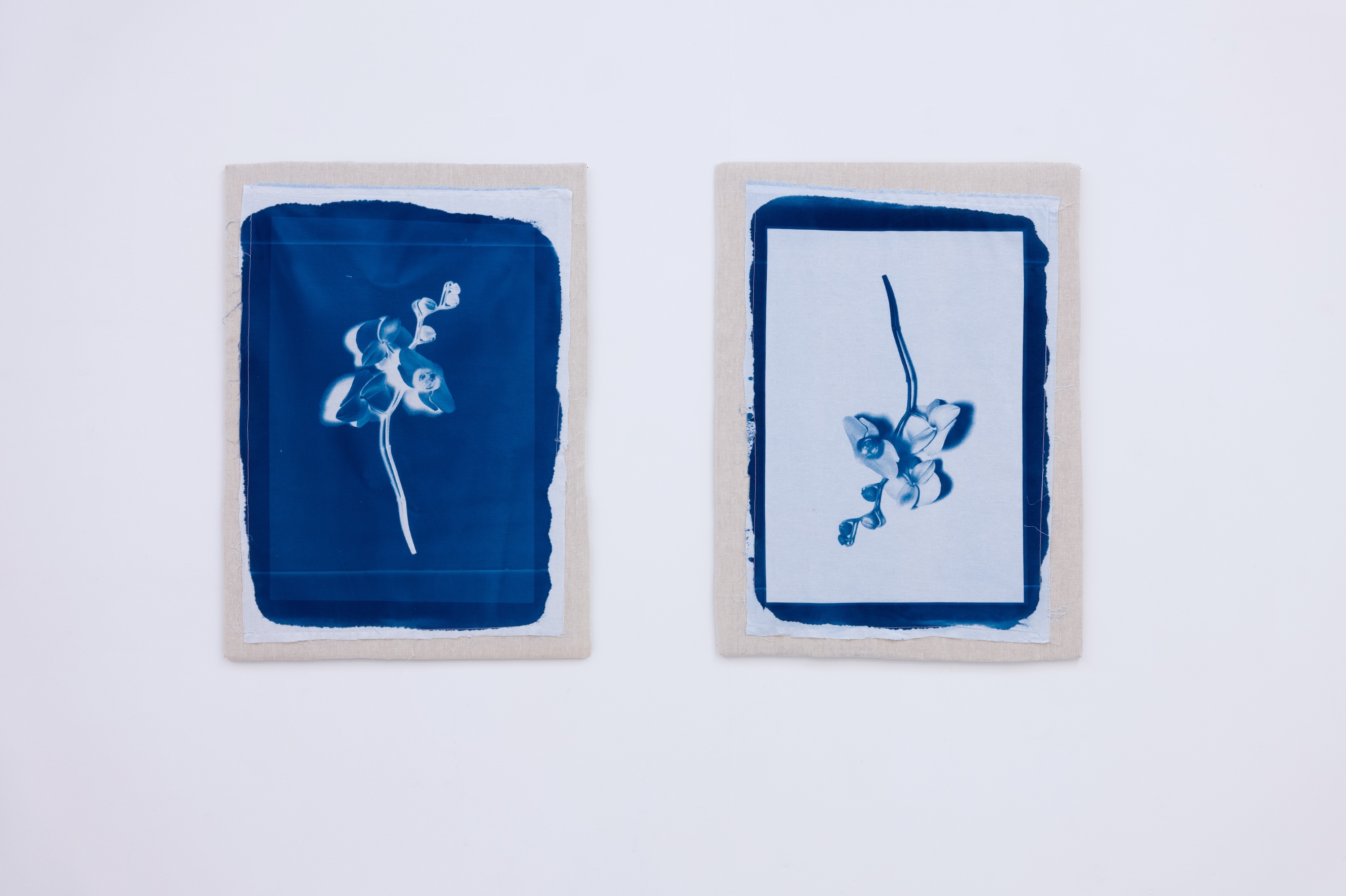
In the Orchid Atlas in Reversal and Phase, Chun Ding transforms orchids from botanical classification objects into triggers for perception and memory. By swapping positive and negative images, she creates a ‘phase-shifted’ viewing experience: the image is no longer a symmetrical replica but generates an echo of time through inversion. Layers of fabric and traces of stitching collectively form a haptic archive, elevating viewing beyond the visual to an experience unfolding within the body. Images are less ‘seen’ than gradually revealed through delay, touch, and sensation; this ‘inversion’ is less subversion than a slow, patient rearrangement.
In Chun Ding's practice, cyanotype is no longer are production of historical craft but a medium open to rewriting, manipulation, and even “contamination”. She integrates sunlight, chemical reactions, fabric, digital layers, and mechanical devices into a single creative process, rendering each exposure both unpredictable and intensely corporeal. Cyanotype transcends mere technique, becoming a “system in process”: time develops within it, tactility accumulates, memory seeps through.
Chun Ding is a London-based visual artist, working with cyanotype photography and textiles to transform images into tangible material surfaces. Through folding, stitching, and layering, she liberates images from the plane, transforming them into supple structures that bear the weight of time, light, and memory.
Her practice often follows threads of botanical and mechanical elements, exploring the tension between natural life and technological systems. She examines how images leave intimate traces within materials, inviting viewers to engage with her work through a slow, embodied act of looking.